
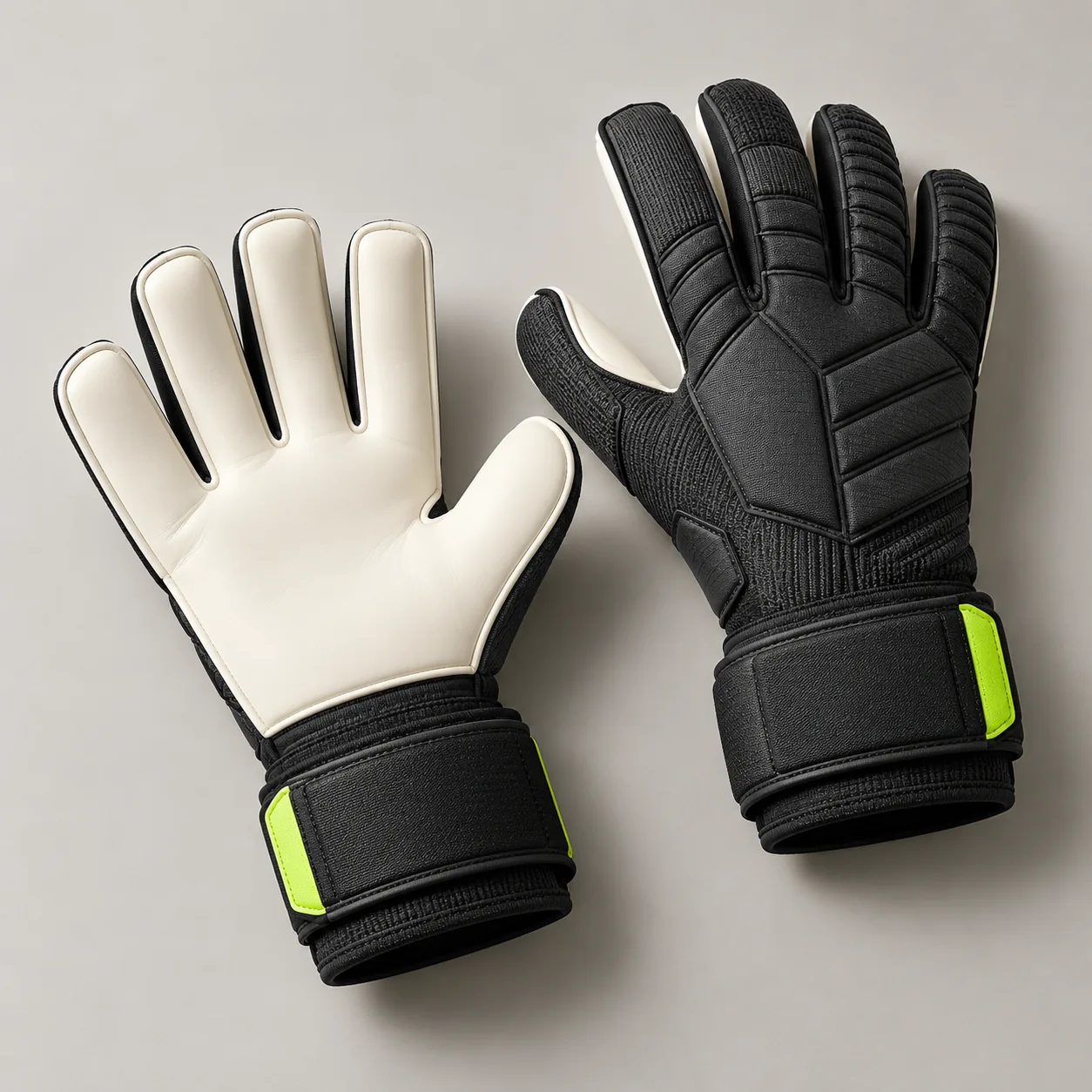
One range, several conditions to evaluate
All weather is a use direction, rather than a universal performance rating. A glove intended for mixed conditions needs a precise palm specification and a sample routine that includes dry and damp handling. State the expected weather, ball types and surfaces. A club training several evenings a week may have different priorities from a brand developing a match-only model.
Choose the palm with the complete construction
Discuss German Contact, Giga, Aqua, Mega and Super Soft options against your price position and use case. Record the selected compound reference and layer thicknesses separately. The backhand, liner and cuff also influence wearing comfort and drying. Keep the cut consistent when comparing palms so a fit change does not dominate the feedback.
- Record dry and damp handling separately.
- Review wear on the intended surface with session notes.
- Check cuff entry and fit across the proposed sizes.
- Approve care information with the sample.
Decide where a specialist pair belongs
One everyday model can simplify a small club order. A wider retail range may benefit from separate wet-weather and artificial-grass training briefs. Compare the samples and the cost of maintaining useful size depth before adding another model. Explain the intended use clearly on your own product pages and packaging.
| Range brief | Sample comparison |
|---|---|
| Mixed conditions | Comparable balls and a recorded preparation routine |
| Repeated academy use | Wear, comfort and cleaning over repeated sessions |
| Range planning | One everyday pair versus separate training and match options |
| Brand identity | Logo, colourway, labels and packaging |